Pages

Showing posts with label Incredible But True. Show all posts

Wednesday, 13 April 2016

Resilience project identifies the first 13 genetic heroes!

The Resilience Project has just published on Nature Biotechnology a new paper on the analysis of genomic data from more than 500k subjects in search for the so called "genetic heroes". The authors first aggregated genomic data from various sources, including 23andMe genotyping database, 1000G, ESP6500 and UK10K sequencing projects, Sweden exomes for schizophrenia research, CHOP sequencing program and others, to reach a total of 589,306 subjects with genomic data. Then they applied a strict filtering criteria to identify 13 healthy people bearing a pathogenic mutations for severe Mendelian childhood disease without showing any clinical symptoms.

Analyzing genomic data from these 13 "genetic heroes" the authors are now trying to study protective variants to understand the molecular mechanisms that have rescued the pathogenic mutations, with the potential to provide useful insight on how to treat the corresponding disease.

Friday, 29 January 2016

System biology provides a magic wand for cell reprogramming

This is not exactly genomic, but it is based on genomic data and so fascinating that I had to report about it!

In a letter appeared recently on Nature Genetics, Rackham et al. proposed the Mogrify tool, a web-based interface that can predict the minimum set of trancription factors (TF) needed for a specific cell type reprogramming. The idea that somatic cells can be reprogrammed across different cell types has been around for a while, but a systematic assessment of the conditions needed for each conversion has never been carried out, mainly due to the amount of time and effort needed to test the various combination of TFs experimentally.


The authors took advantage of the huge amount of data produced by the FANTOM project to calculate the specific transcriptional landscape of different cell types and then developed a method that could predict which TFs should be overexpressed to move a specific cell type to another one.

With Mogrify it could be now much easier to perform reprogramming experiments, an approach with a potential great impact for regenerative medicine.

The idea behind this interesting tool is summarized in Figure 1 from the paper as you can see below

The Mogrify algorithm for predicting transcription factors for cell conversion.

Thursday, 30 October 2014

Exome Aggregation Consortium release its data on 63,000 exomes!


On October 29th, the Exome Aggregation Consoritum as released its browser based on the impressive number of 63,000 human exomes.
This database is the larger collection of human exome data so far and provide both a web base interface to retrieve variants in your gene of interest or the download of a VCF file containing the list of all the annotated variants.

The final dataset is based on sequences from several consortia working on complex disorders and also includes 1000G and ESP6500 data.

The first aim of the Consortium is to study the distribution of "human knockout", that is people having both copies of a given gene inactivated by severe mutations. The analysis of associated phenotype data promise to reveal lot of interesting information of the actual role of single human genes. Moreover, the study of subjects carrying inactivating mutations on known disease genes but not showing the expected phenotype could lead to identification of new therapeutic targets.

See more information on Nature News and Genome Web!

Monday, 23 June 2014

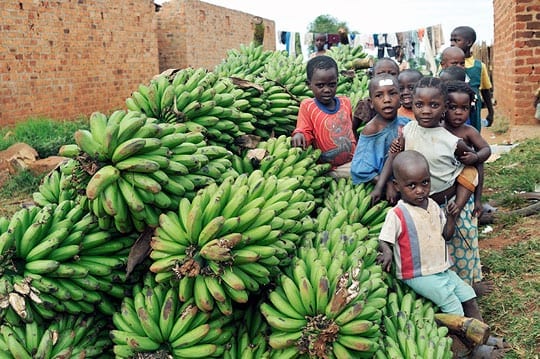
One banana a day will keep the doctor away

According to GenomeWeb and The Guardian, researchers from Australia are tweaking the genome of the banana in order to get it to deliver higher levels of vitamin A. The study is aimed to supplement vitamin A in Uganda and other similar population, where banana is one of the main food sources and deficiency in vitamin A cause blindness and death in children.

The group of professor James Dale, from the Queensland University of Technology, received a $10 million grant from the Bill and Melinda Gates Foundation to support this 9 year project.

Dale said that by 2020 vitamin A-enriched banana varieties would be grown by farmers in Uganda, where about 70% of the population survive on the fruit.

Tuesday, 2 July 2013

Incredible But True: Life Technologies introduces an amplicon-based exome sequencing kit

Life Technologies has launched an exome capture kit that makes use of its AmpliSeq technology.
According to the manufacturer, the AmpliSeq™ Exome Kit minimizes the high cost and complexity of exome sequencing enabling the enrichment and sequencing of ~294,000 amplicons (!!!).
The kit targets 97% of coding regions, as described by Consensus Coding Sequences

(CCDS) annotation, in 12 primer pools for highly specific enrichment of exons within the human genome totaling ~58 Mb (it is not clear to me if the amplicons include sequences like UTRs and miRNA).  The novel technology, designed for the Ion Proton platform, delivers >94% of targeted bases covered at 10x even with two exomes per Ion PI  chip. Total workflow from DNA to annotated variants of an exome can be achieved in two days, including six hours for exome library preparation and three hours of sequencing time. Compared to hybridization approaches for exome sequencing, one advantage of an amplicon-based approached is that the input amount is small (as little as 50 nanograms).
Additional information can be found in this Life Technologies' Application Note.